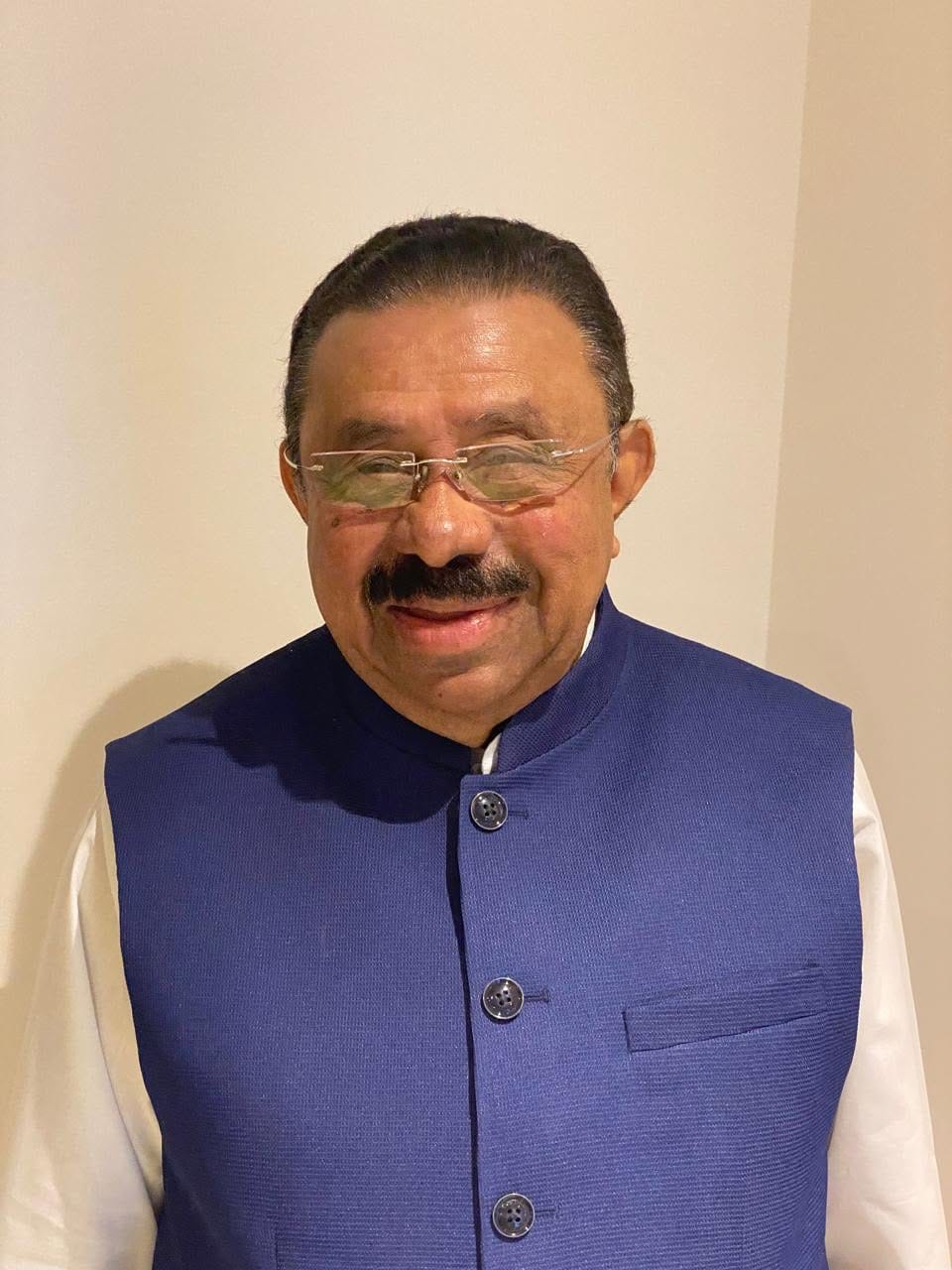
From helping women build independent livelihoods to championing the concerns of expatriate Keralites, the veteran public figure's contributions have extended beyond political office. His journey has now inspired an internationally recognised documentary, The Legacy of Truth.
Thiruvananthapuram, October 2026: A woman learning to earn her first independent income, a family cultivating vegetables in a small backyard, or a migrant worker thousands of kilometres away hoping that someone back home will listen to his concerns. These may appear to be ordinary moments in everyday life, but they represent the kind of social challenges that have shaped much of M. M. Hassan's public journey.
For over five decades, Hassan has occupied different positions in Kerala's political landscape. Yet, beyond the legislative debates, ministerial responsibilities and organisational appointments lies another dimension of his career, one connected with grassroots livelihoods, community development and the welfare of people whose struggles rarely make newspaper headlines.
His story is not merely about the offices he has held. It is also about the belief that meaningful public service must reach beyond the corridors of power and find relevance in the lives of ordinary citizens.
Hassan's journey began in the politically vibrant environment of Kerala's student movements. Emerging through the Kerala Students Union (KSU), he gradually established himself as a prominent figure in the state's political life. His career subsequently included five terms in the Kerala Legislative Assembly, ministerial responsibilities under former Chief Minister A. K. Antony and leadership positions within the Kerala Pradesh Congress Committee and the United Democratic Front.
However, one of the more distinctive aspects of his public career has been his association with initiatives that sought to translate social welfare objectives into practical opportunities.
When Empowerment Became More Than a Promise
Among the initiatives closely associated with Hassan is the Janasree Sustainable Development Mission, an organisation established to promote community participation, self-employment and economic empowerment.
At its heart was a straightforward idea: financial independence should not remain beyond the reach of people with limited resources.
Through Janasree, efforts were made to encourage small-scale entrepreneurship, vocational training, microfinance and income-generating activities. The organisation promoted skills such as food processing, soap production, umbrella manufacturing and paper-bag making, creating opportunities for individuals to explore livelihoods beyond conventional employment.
For women, particularly those seeking greater financial independence, these programmes represented an opportunity to participate more actively in household economies and local enterprise.
The importance of such initiatives extends beyond the income they may generate. When a woman acquires a marketable skill, she gains the possibility of greater financial agency. When a family establishes a small enterprise, it creates an additional source of economic security. And when communities organise around shared economic interests, development begins to acquire a more participatory character.
Under Hassan's chairmanship, Janasree sought to build on these principles, connecting livelihood development with wider social participation. In 2009, he announced an ambitious vocational training target involving 10 lakh members, reflecting the scale of the organisation's aspirations.
From Household Gardens to Community Well-Being
Hassan's association with grassroots development also extended into agriculture and environmental awareness.
Through Janasree, he advocated organic vegetable cultivation, encouraging households to use available land and domestic spaces to grow food. The initiative sought to promote healthier agricultural practices, reduce dependence on externally sourced vegetables and encourage families to become more involved in food production.
The idea carried particular relevance in a state where questions surrounding food safety, agricultural dependence and household expenditure have remained important public concerns.
Rather than viewing development exclusively through large projects and investments, such programmes placed attention on the potential of smaller, community-led actions.
Hassan's public advocacy also addressed issues affecting everyday economic life. In December 2004, he undertook a 23-hour fast in Thiruvananthapuram against forced hartals, drawing attention to the difficulties shutdowns could create for daily-wage earners, small businesses and ordinary citizens.
The protest reflected his stated concern that political expression should not come at the expense of people's ability to work, travel or earn a livelihood.
A Voice for Malayalis Beyond Kerala's Borders
Another important dimension of Hassan's career emerged through his engagement with non-resident Keralites.
For generations, migration has shaped Kerala's social and economic identity. Families across the state have depended on earnings from relatives working overseas, particularly in Gulf countries. Yet, behind the remittances and stories of economic opportunity are the practical difficulties of living and working far from home.
During his tenure as Minister for Non-Resident Keralites' Affairs, Hassan was associated with the institutional framework supporting expatriate welfare, including NORKA and NORKA-ROOTS.
His public interventions addressed concerns affecting overseas Malayalis, including travel costs, welfare requirements and the need for stronger engagement between expatriate communities and their home state.
These concerns formed part of a wider understanding of public responsibility, one that recognised that Kerala's social fabric extended well beyond its geographical boundaries.
A Life in Public Service Finds Its Way to the Screen
It is against this background of political responsibilities, social initiatives and public advocacy that Hassan's journey has found a new form of expression through documentary cinema.
The Legacy of Truth, a documentary directed by filmmaker Maqbool Rahman, revisits the life and public career of M. M. Hassan, tracing his evolution from student activism to senior political leadership while bringing attention to the social concerns and institutional responsibilities associated with his journey.
Rather than limiting its subject to electoral milestones, the documentary provides a wider perspective on a career spanning different phases of Kerala's political and social history.
The film has also attracted attention through its reported recognition at international film events in Malaysia. According to statements published by the filmmaker, Rahman received a Best Director honour for his work, while the documentary secured first position in its category at a Malaysian international film event.
Produced by Nisha M. H. under the banner of Purpose First, with cinematography and editing by Anish Lal, the documentary brings together the experiences and developments that have marked Hassan's decades in public life.
For a figure whose career has unfolded across generations, the documentary represents more than a retrospective. It offers an opportunity to revisit the relationship between politics, community development and social responsibility, while introducing younger audiences to a period of Kerala's public history they may know only through fragments.
Its international recognition has also created an opportunity for Hassan's story to reach audiences beyond the state and the country.
The Social Questions That Continue Beyond Political Office
Hassan's association with social welfare has also included initiatives addressing alcohol and drug abuse, family well-being and community awareness.
Janasree's broader objectives incorporated concerns surrounding harmful social practices, public health and the need for stronger community support systems. These priorities reflected an understanding that financial development alone cannot address every challenge facing society.
His political responsibilities continued alongside these activities. He served as president of the Kerala Pradesh Congress Committee between 2017 and 2018 and subsequently as convenor of the United Democratic Front from 2020 to 2025.
These appointments placed him in prominent positions within Kerala's political establishment. Nevertheless, his association with Janasree and expatriate welfare illustrates how his public engagement also extended into areas where policy, community organisations and individual livelihoods intersect.
Across his career, the recurring themes have included employment opportunities, economic self-reliance, community participation and the practical consequences of political decisions on ordinary people.
A Legacy Measured Beyond Titles and Positions
Public figures are often remembered through the positions they occupied, the elections they contested and the political developments they witnessed. But a fuller account of public life also requires attention to the institutions they helped build, the causes they supported and the social questions they brought into public discussion.
For M. M. Hassan, those questions have ranged from the economic independence of women and opportunities for small entrepreneurs to the welfare of expatriate workers and the consequences of political shutdowns.
Not every initiative can be measured through a single statistic, nor can decades of public service be reduced to a list of achievements. Their significance also lies in the issues they sought to address and the opportunities they attempted to create.
As The Legacy of Truth brings his journey to the screen, it invites a broader examination of the relationship between political leadership and social contribution.
And perhaps that is where the story returns to its beginning: not in a legislative chamber or at a public ceremony, but in the everyday aspirations of people seeking a livelihood, greater independence and a better future.
For Hassan, the enduring measure of his public journey may ultimately lie not only in the offices he held, but in the communities and concerns that remained part of his work long after the political speeches ended.